Pages

Showing posts with label THANKSGIVING TURKEY. Show all posts

Tuesday, 5 July 2016

Dreaming in the cinema

It doesn´t happen too often but I have sometimes dreamt in the cinema theatre not only because of the movie´s plot but because I have fallen asleep at a certain moment watching a film because of feeling too tired.

But it has always happened when the film wasn´t absorbing enough and it is not oneirology that I want to talk about if we understand it as the scientific study of dreams, either from the psychological or Freudian point of view of those successions of images, ideas, emotions and sensations.


What I want to talk about is more about a few ideas on movies most probably inspired by thoughts emerged from the world of dreams.


In 1990, world-famous director Akira Kurosawa made a movie inspired from eight dreams he had had throughout his life probing how this mental activity has been a source for this kind of artist and not only for painters or writers.
Let´s talk a little bit about five of the very best-known movies that were created by or based on human oneiric mental activity, using the most attractive images or tales.


`The Cabinet of Doctor Caligari´, Robert Weine (1920)

This black-and-white expressionist movie is undoubtedly a masterpiece. It is not only visually innovative but it creates a new theatrical atmosphere through the compelling mannerisms of the characters.

The plot, recounting several crimes committed by a sadistic man, reveals his will to manipulate a somnambulist to murder others. So, we are talking about dreams, about abhorrent things that a normal or even a clever mind could conceive while it is asleep.


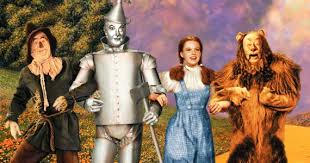
`The Wizard of Oz´, Victor Fleming (1939)

 
This is the title of the many celebrated versions of this original Fleming children´s film. Based on a novel that tells what happened to Dorothy Gale, a young girl on a small farm in Kansas whose dull life is disturbed by a tornado that takes her to a new, fantastic land.


The kingdom of Oz, being a part of Dorothy´s dreams, is presented as a fantastic land where the characters she meets -the Scarecrow, the Tin Man, the Cowardly Lion- are in some way actual people from her real life.
This touching and dreamy movie was made for kids but also to be enjoyed by everyone.


`Spellbound´, Alfred Hitchcock (1945)

 
This thriller starring by Ingrid Bergman and Gregory Peck brings us the classic procedure of investigating crimes through psychoanalytical methods because it is thought that some massive amnesia and guilt complexes are hiding past events.


The movie starts with a Shakespeare quote that says: `The fault...is not in our stars but in ourselves...´


All the action revolves around the medical staff of a mental hospital, and especially the attitude of its new director who replaces the former that was forced to retire, and his strange disappearance that is supposed a case of murder.


Dreams and their psychological interpretation are presented here as clues to solve the crime. That is why Dr. Petersen -Bergman- uses her psychoanalytical training to dig through eyes, curtains, scissors, a man with no face, a man falling off a building, a man hiding behind a chimney and other mysterious images in a Salvador Dali dream sequence. This and other scenes make it possible to find the solution to the crime.


A well done classic! 


`Cinema Paradiso´, Giuseppe Tornatore (1988)

This is not, obviously, a dream movie, but it contains all the nostalgic past of the childhood of a village boy whose first love was undoubtedly the seventh art, a dream-making machine for whole the population of a small Sicilian town.

The film is a long flashback from the eighties Rome to Giancaldo´s fifties, the birthplace of the famous Italian film director Salvatore Di Vita, beginning when he is told that Alfredo has died. His girlfriend asks him who he was, and the plot recounts the story of the movie house known as Cinema Paradiso and Giancaldo´s friendship with its projection booth operator.


World War II, the censorship of kisses and embraces, a nitrate film fire, a widowed mother and the faces of people who frequented the cinema, all these are contained in his memories... making peace with the poor past of a Sicilian boy. A memorable movie with memorable music by Ennio Morricone.


`Alice in Wonderland´, Tim Burton (2010)

 
This movie takes place during a dream, as Alice -the main character- is transported to her own colorful dream world inhabited by worried white rabbits.


This movie by Tim Burton, starring Johnny Depp and Anne Hathaway, among others, and based on Lewis Carroll´s classic novel, as well as the earlier and memorable animated version by Walt Disney, tells the story of a nineteen-year-old- Alice, who is told that she can restore the White Queen to her throne because she is the only one who can kill the creature that is controlled by the Red Queen and is terrorizing Wonderland´s inhabitants.


Although this 2010 version was only given the `Best Art Direction´ and `Best Costume Design´ awards and nominated for `Best Visual Effects´, it was a very successful film. 


                                                                 The Thanksgiving Turkey

Friday, 22 April 2016

The Cinemaniac Corner: Luck or fate?

Although there have been many ways of understanding the word `luck´ depending the cultural background you are talking from, we can try to define a general idea about this concept that all of us mention so often, maybe too often.

Luck might refer to some kind of unpredictable events that could seriously affect our lives, events that are beyond one´s control. These events are initially purposeless but can simultaneously act on our future in a positive or negative way, that´s the reason why we add the adjective of `good´ or ``bad´ to the word luck.

The concept itself is very different from others such as coincidence, determination, chance or providence. But fate is another thing. Fate refers to destiny. It is conceptualized as the idea of a fixed future completely independent of anything a person can do. You don´t know what is going to happen but these things are undoubtedly going to happen, whatever you might do, as they are fixed in advanced.

You might wonder if there are movies related to this concept of good or bad luck, or any that might have something to do with being lucky in one´s life. Plots can´t be random, by definition. On the contrary, every small detail of a film must be perfectly designed. But some movies have tried to confront this topic.

One might be the classic Ernst Lubitsch film `If I Had a Million´ (1932) starring Gary Cooper and Charles Laughton, among others. It opens with the decision of a very rich entrepreneur who decides to give a million dollars to each one of eight randomly selected people, so that he will not have problems with his last will and his relatives´ ambitions for his heritance. The chance or good luck appears, apparently, when you receive the good news in a telephone call...


Similar in some ways is a Spanish film directed by José Maria Forqué titled `A Million in the Dustbin´ (1967) (`Un millón en la basura´) starring José Luis López Vázquez and Julia Gutiérrez Caba, among others. In this comedy, there is also a touch of tenderness and moral dilemma embedded in the plot. It´s the story of a poor street sweeper, working in the very early and cold mornings of a Spanish city in the fifties, who by chance finds a million pesetas among the litter.


He can´t believe his very good luck, or should we say his certain fate?. He decides to keep it for himself as at that moment he has serious financial problems. But his beloved wife suggests that he could prove himself to be completely honest by giving it back to its true owner...

In the opposite direction, the movie `It Could Happen to You´ (1994), starring Nicolas Cage and Bridget Fonda and directed by Andrew Bergman, also relates a moral conflict in the main character -Charlie, a good policeman- who has a very stormy relationship with his wife -Muriel, a selfish hairdresser.
One day, Charlie can´t afford to leave a tip for Yvonne, the waitress of the restaurant he usually goes to, so he offers her half of his prize if he wins from a lottery ticket he has just bought. Surprisingly, he wins. His faithful intention is to keep his promise and give half of it to Yvonne, as promised. But unlike the previous movie, his wife Muriel has a very different idea of what he should do.

He finally acts according to his conscience and he discovers that the waitress has a golden heart and buys the restaurant reserving a table everyday to give food to poor people, as she was in the past... I don´t want to ruin the rest of the film for you!.

On the subject of winning lottery prizes, which is supposed to be a very lucky event generally thought to completely change anyone´s life in a positive way, we can find another commercial movie titled `Lottery Ticket´ (2010).

Directed by Eric White and starring by Bow Wow among others, this film focuses not specifically on the main character but on the changes in other people´s behaviors. Kevin Carson, the main character, wins a 370-million-dollar lottery prize with a single ticket, and he soon realizes that his neighbors are not truthful friends but just people trying to get something from their relationship with him. Suddenly, Carson´s defects are virtues, his bad habits are examples for children from that time on, his pals demonstrate how cool he is... everything changes in his `apple polishing´ mates.

More interesting is in my opinion another movie, titled `Mr. Nobody´, directed by Jaco Van Dormael and starring Jared Leto and Sarah Polley, among others. This Belgian science fiction film develops more a philosophical point of view about fate and the vital consequences of dilemma decisions and casual circumstances. The plot has the virtue of narrating for us the different possibilities that condition the outcomes of the main character Nemo´s life.

As he is being interviewed by a journalist at the end of his days, the last human to die in a futuristic world where immortality has been achieved, he narrates his life and how it could have been from three biographical moments: at age 9, when his parents divorced, at age 15 when he fell in love and at age 34 as an adult.

So this is a small review of movies that incidentally touch topics related to luck or fate. I hope that if you have been interested by any of these works of the Seventh Art, you´ll try to watch them.
Thanksgiving Turkey

Thursday, 21 January 2016

The Cinemaniac Corner: Water


After more than forty days without rain in the city I live, I'm a little bit obsessed with water. This is considering that it has always been my favorite basic element, according to the ancient division of nature into four of these: fire, air, earth and water.
From my devotion to this principle, I have tried to remember three memorable movies in which water has definitely been a kind of basic environment or raw material, and -of course- that I have really enjoyed.
Here they are:
SINGIN' IN THE RAIN (1952)
This Gene Kelly and Stanley Donen musical comedy has been selected and registered as "culturally, historically or aesthetically significant" in the history of American cinema.
A masterpiece that shows a more or less conventional love story about the time when silent movies became "talkies", it is very well known for of its music, songs and especially for its dance scenes.
In the famous sequence in which Kelly sings a little song while spinning an umbrella, he gets soaked to the skin and becames sick with high fever.  
Debbie Reynolds was not a very good dancer, so she had to learn. Fred Astaire himself offered to teach her how to get through those shots. The third of the famous song-and-dance team was Donald O´Connor.
Acclaimed as one of the best Hollywood musicals, and regarded as a refreshing and entertaining movie, it comes to my memory as a movie soaked in rain, although indeed it really didn´t have so many moments of flooding.


JAWS (1975)
Jaws, the famous Spielberg movie, gave me awful nightmares for a while, and made me a bit frightened of the idea of swimming in the open sea, especially at night.
Surely, this was only due to the fact of being an easily impressionable teenager. Soon after, I became a very fond of diving, passing a fifty-meters-deep diving exam. So, finally, I don´t think it left me so traumatized.
But it was a water-inundated film that amused me from the very beginning with the scene at the beach party, in which the giant shark appears for the first time from the abyssal ocean and attacks its victim: the unaware swimming girl. 
It was very well received by film critics and it was  amazing to find out that many of the scenes in the movie were done using mechanical sharks, as they seemed really authentic.
When a fisherman of the area suffers another attack from the killer animal, a warning to the tourists and the temporary closure of the beaches becomes absolutely necessary until the beast is hunted down, but local authorities discredit the version of  shark attacks only because of commercial interests.
This is how the plot gets intensifies: policy dilemmas, swimmers and sailors´ fears, hunting activity... or should we say fishing skills?
Great music, a great theatrical run and great cast with interesting performances by Roy Scheider and Richard Dreyfuss, among others.   

TITANIC (1997)
James Cameron produced this film about a sinking luxury liner mixed together with a romantic plot. And so the marine disaster covers both circumstances. Its success was total.
The movie begins with the casual discovery -by treasure seekers- of a rare necklace with an incrusted diamond from the sunken vessel of the biggest ever transatlantic passenger ship that had struck against an enormous iceberg.
The most exciting part of the movie, in my opinion, and besides the conventional inter-class romantic relationship between Leonardo Di Caprio and Kate Winslet, comes after the collision.
The breaking apart of the ship, the tragic end of many passengers -especially the poorest- when the crew realizes that there are not enough lifeboats for all of them, the voluntary sacrifice of the members of the orchestra trying to give some calm to the general panic...
The music, in fact, has become very well-known and has been frequently played and acclaimed since the film´s premiere.
Its success created a huge general interest in the real story of this particular ship, and probably in all marine archaeological studies on old sunken vessels, forgotten for centuries and laid to rest under tons of water.    
        
The Thanksgiving Turkey

Tuesday, 23 June 2015

Four Movies and Four Lifestyles. The Cinemaniac Corner (Second Season)


The Professor Lifestyle:


"Shadowlands" (1993)


         This Richard Attenborough production called "Shadowlands", starring Anthony Hopkins and Debra Winger as the main characters, is a biopic  based on the life story of the British professor and writer C.S. Lewis and his relationship with his younger American wife Joy Davidman, as narrated in his book `A Grief Observed´.


         In the 1950s, a single middle-aged British professor follows his habits, timetables and routine infatuations and fixations. He is an acclaimed lecturer at the University of Oxford and a very well-known writer. That´s what we could call `his comfortable boring lifestyle´.


         His unimaginative life is shocked by the unexpected arrival of a divorced North American poetess and her son, who appear to be devoted readers of his works.


         Two very different minds, cultures, backgrounds and beliefs suddenly meet, so that the peaceful traditional life of the professor and his doctor brother, as well as housemate, becomes deeply disturbed.


         It is memorable the way the movie shows the contrasts between two different English-speaking nationals: an American woman, English man. 


         Their relationship allows them to share and face new ways of contemplating life and the world, of admiring traditions and cultural fates, of giving each other a narrative perspective of their biographies. The cultural nuisances and disagreements don´t prevent their slow mutual process of falling in love.


         But suddenly she is diagnosed with cancer, and the professor´s point of view about marriage, about respectful traditions, about the meaning of life, about his admiring American woman friend and her son, about his own feelings, is dramatically lowered from his professorial perspective.


         His true love for these two he has recently met shakes him greatly, and a humble change of his lifestyle is needed. It is a very moving love that makes him behave a little bit like a child. Also very moving is his faith in an almighty providing God.


Can a stuck-up professor, surrounded by sarcastic colleagues, become a poor simple suffering man in love? 


The Soldier Lifestyle: 

"Paths of Glory" (1957)


         There have been many movies about war and about the lifestyle of soldiers. Many of them sugar-coat their real lives or elude the tough part of them. This one I especially like because it takes us directly to the horror of war and to the nonsense of some battle attempts. Directed by Stanley Kubrick and starring Kirk Douglas, the film presents Colonel Dax -this is Douglas ´character- as an officer who tries to understand and defend his soldiers against charges of cowardice because they have refused to continue a suicidal attack.


         The action is set in France during the First World War. The plot is based on real historical facts: both the capital punishment given to some soldiers for theoretical cowardice and sometimes in a random decimation, and also the orders given by artillery officials about opening fire against their own trenches so that the soldiers would be forced rightly to combat onto the battlefield. 


         Of course, the film´s showing was anything but peaceful, especially in France. It couldn´t be completely watched uncut over there until 1975. Nowadays, it is considered an iconic anti-war film, and when it was released many French and Belgian ex-combatants protested because of the image of them it projected.


         In my opinion -and although it shows only the very dark face of some soldiers´ lifestyles- it is definitely a masterpiece. First, because of the great performance by Kirk Douglas and the rest of the cast. Secondly, for the beauty of the black and white photography. And, last but not least, because of how the film deals with different moral dilemmas: the ambitions of some officials, the patriotic duties of the soldiers, blind martial obedience imposed even when senseless orders are given. And not to mention the harsh lifestyles of soldiers in cruel wars that some heroic army members try to ease.      
        

The Cowboy Lifestyle:


"The Man Who Shot Liberty Valance" (1962)


         This magnificent movie by John Ford, starring the actors John Wayne and James Stewart, among others, offers not only a panoramic view of cowboys and the western lifestyle, but a deep reflection on different ways of confronting violence, injustice and wrongdoing.


         To add more to the plot, we have two men trying to overcome the evil of the bandit Liberty Valance in different ways: the non-violent idealistic principle of attorney Stoddard -played by Stewart- and the practical tough eye-for-an-eye behavior of cowboy Doniphon -played by Wayne; and both men fighting for the same woman´s love: Hallie -played by Vera Milles-.


         Stoddard is already a Washington Senator and makes a long, surprising train journey to attend the funeral of local rancher Doniphon. The story then is narrated in a long flashback: how he arrived there twenty-five years earlier, how he was robbed and battered by the Liberty Valance gang, how he still preached for justice but not for brute force, how he was challenged to a gunfight by Valance after his efforts to improve infrastructures, safety and education were sabotaged, and how everything ended later because of Valance´s unexpected death in a shootout. 


         Things in the West seemed to be one way but they were another, not only because of how Valance´s death happens in the movie but also because of how Stoddard was chosen by Hallie.


         Ford was said to be old-fashioned because he filmed this movie in black and white. But the virtues he wanted to project from rough cowboy Doniphon and from the fair, honorable attorney Stoddard seem to be old-fashioned, too: the aim of justice, grateful behavior, romantic surrender and the regrets of a triumphant politician.


     For me, many of these virtues should be reconsidered, not just remembered as important to the lifestyles of some old American settlers, farmers and cowboys. Don´t miss this provocative classic movie!   


The Monk Lifestyle:

"Of Gods and Men" (2010)


         This French movie by Xavier Beauvois tells the story of eight real Trappist monks living in the Algerian mountains during the Civil War. It narrates their slow ordinary lifestyle, living in harmony with the Muslim population from 1993 to 1996, until seven of them were kidnapped and beheaded.


         The movie was filmed in an abandoned monastery in the Moroccan Atlas, giving great realism to the plot. The title is a reference to a verse from the book of Psalms: `I have said, Ye are gods; and all of you are children of the most High. But ye shall die like men´.


         The risk was clear from the beginning of the film, because in addition to their lives of prayer and their work giving medical assistance to local population, they receive the news that some Croatian workers have been murdered by fundamentalist Islamic soldiers not too far away.


         The main question they ask themselves is whether they must flee or stay there. At the beginning, the monks are divided about what they should do. But one of the most interesting approaches to the movie is to observe how they make an introspective evolution to get to the same point from different individualities: the moral importance of maintaining their committed lives together with the local population in spite of facing violence.


         The movie breathes authenticity, and this is why it is a beautiful film. It is also historically faithful; the inner daily life of the monks is very well reflected, and their traditions and liturgies are portrayed perfectly. But what  impressed me most was how every monk had his own personality, his own doubts, his own fears and his own tasks in the community, and how they reached a common decision hand in hand with each other. And how all this is so well shown in the film.

         The only survivor, frère Jean Pierre, now in his 90s, is still living in an isolated monastery in the Moroccan Atlas, with another five monks, the same lifestyle that he used to follow. He recently said: `Forgiveness is like a fragile butterfly that when flapping its wings can provoke a reaction in another far place of the world´.


The Thanksgiving Turkey