

Showing posts with label DREAMS. Show all posts
Showing posts with label DREAMS. Show all posts
Monday, 18 July 2016
‘Merrily, merrily, merrily, merrily, life is but a
dream,’ said Calderón de la Barca (well, not exactly). Yes, walls that fly away into infinity, floors that turn into Jell-o,
long-dead acquaintances that drop in for tea and, of course, that locked room
at the top of the stairs… You got it - DREAMS are the fertile field we’re ploughing in
this issue. And if you immediately forget our posts after you read them, don’t
worry. Dreams are like that. Best wishes for the summer, everyone! See you next time
around!


Friday, 15 July 2016
Le cadavre exquis (the exquisite corpse)
It seems obvious to emphasize
how important the visual nature of
the dream is. However, this might be the reason that the major work of Sigmund
Freud, The Interpretation of Dreams
(1900), had such a big impact on modern art, even greater than in psychiatry
and psychology, at least in the
early stages.
Although Surrealism emerged as
a literary movement inspired by Freud’s theories of the unconscious,
nineteenth-century mysticism and Symbolist art and literature, almost at the
same time, the movement’s proponents realized the potential of the visual arts
to express the imagery of dreams and the unconscious mind. So the practice of
drawing, which offers the advantages of immediacy and spontaneity, became the
most fertile medium of expression and innovation among the Surrealists.

It also seems obvious to
reject the naive and clichéd affirmation that the Surrealist artists “copy”
their dreams in their works. Max Ernst complained about it in his text What is Surrealism?(1934), but it is
still too common even today.
For them, the dream is what
might be termed life’s other fifty percent, a level of experience different
from conscious life, the knowledge and liberation of which impinges in a
special way on the enrichment and amplification of mental life, which
constitutes the Surrealists’ main objective.
They used, in their efforts to
bypass the conscious mind and access the subliminal realm, diverse drawing
techniques like automatic drawing,
frottage, decalcomania, collage, grattage, but some of the most striking
surrealist drawings were the “exquisite corpses”.

The “exquisite corpse” is a
surrealist game that involved collaboration and chance. It is a method by which
a collection of words or images is collectively assembled and is similar to an
old parlour game called Consequences.
The technique got its name from results obtained in initially by playing: “Le
cadaver/exquis/boira/le vin/nouveau” (The exquisite corpse will drink the young
wine). Other examples are: “The dormitory of friable little girls puts the
odious box right” and “The Senegal oyster will eat the tricolor bread”. These
poetic fragments seemed to reveal the unconscious reality in the personality of
the group, resulting from a process of what Ernst called “mental contagion”. It
was natural that such oracular truths should be similarly sought through images,
and the game was immediately adapted to drawing by assigning a section of the
body to each player, though the Surrealist principle of metaphoric displacement
led to images that only vaguely resembled the human form.

Tristan Tzara (1896-1963)
described the rules of the drawing game: “Three (or more) of you sit down
around a table. Each one of you, hiding from the others, draws on a sheet the
upper part of a body, or the attributes able to take its place. Pass on to your
neighbor on the left this sheet, folded so as to conceal the drawing, but for
three or four of its lines passing beyond the fold. Meanwhile, you get from
your neighbor on the right another sheet prepared in the same way (previously
folded perpendicular to the axis of the body to be realized).

André Breton, the founder of
Surrealism, considered that with the exquisite corpse we had at our command an
infallible way of holding the critical intellect in abeyance and fully
liberating the mind’s metaphorical activity.

In my opinion, the exquisite
corpse grasps the atmosphere of the dream in a amazing way, although the
results can be sometimes more grotesque than real dreams. Both the spontaneity
and the nonsense due to the change of one hand to another, make the magic of
the “surreal” arise to its peaks. By the way, it might be an amusing game to
partake in when you are out at the bar with your friends, the only thing you
need is a pen, a piece of paper (a paper napkin, for example) and want to let
fly your imagination. Knowing how to
draw in this particular case is not important, but rather to go into a “surreal adventure”.


Li
Tuesday, 5 July 2016
Dreaming in the cinema
It doesn´t happen too often but I have sometimes dreamt in the cinema theatre not only because of the movie´s plot but because I have fallen asleep at a certain moment watching a film because of feeling too tired.
But it has always happened when the film wasn´t absorbing enough and it is not oneirology that I want to talk about if we understand it as the scientific study of dreams, either from the psychological or Freudian point of view of those successions of images, ideas, emotions and sensations.
What I want to talk about is more about a few ideas on movies most probably inspired by thoughts emerged from the world of dreams.
In 1990, world-famous director Akira Kurosawa made a movie inspired from eight dreams he had had throughout his life probing how this mental activity has been a source for this kind of artist and not only for painters or writers.
Let´s talk a little bit about five of the very best-known movies that were created by or based on human oneiric mental activity, using the most attractive images or tales.
`The Cabinet of Doctor Caligari´, Robert Weine (1920)
This black-and-white expressionist movie is undoubtedly a masterpiece. It is not only visually innovative but it creates a new theatrical atmosphere through the compelling mannerisms of the characters.
The plot, recounting several crimes committed by a sadistic man, reveals his will to manipulate a somnambulist to murder others. So, we are talking about dreams, about abhorrent things that a normal or even a clever mind could conceive while it is asleep.

`The Wizard of Oz´, Victor Fleming (1939)
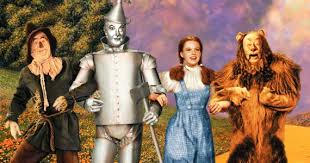
This is the title of the many celebrated versions of this original Fleming children´s film. Based on a novel that tells what happened to Dorothy Gale, a young girl on a small farm in Kansas whose dull life is disturbed by a tornado that takes her to a new, fantastic land.
The kingdom of Oz, being a part of Dorothy´s dreams, is presented as a fantastic land where the characters she meets -the Scarecrow, the Tin Man, the Cowardly Lion- are in some way actual people from her real life.
This touching and dreamy movie was made for kids but also to be enjoyed by everyone.
`Spellbound´, Alfred Hitchcock (1945)
This thriller starring by Ingrid Bergman and Gregory Peck brings us the classic procedure of investigating crimes through psychoanalytical methods because it is thought that some massive amnesia and guilt complexes are hiding past events.
The movie starts with a Shakespeare quote that says: `The fault...is not in our stars but in ourselves...´
All the action revolves around the medical staff of a mental hospital, and especially the attitude of its new director who replaces the former that was forced to retire, and his strange disappearance that is supposed a case of murder.
Dreams and their psychological interpretation are presented here as clues to solve the crime. That is why Dr. Petersen -Bergman- uses her psychoanalytical training to dig through eyes, curtains, scissors, a man with no face, a man falling off a building, a man hiding behind a chimney and other mysterious images in a Salvador Dali dream sequence. This and other scenes make it possible to find the solution to the crime.
A well done classic!
 `Cinema Paradiso´, Giuseppe Tornatore (1988)
This is not, obviously, a dream movie, but it contains all the nostalgic past of the childhood of a village boy whose first love was undoubtedly the seventh art, a dream-making machine for whole the population of a small Sicilian town.
The film is a long flashback from the eighties Rome to Giancaldo´s fifties, the birthplace of the famous Italian film director Salvatore Di Vita, beginning when he is told that Alfredo has died. His girlfriend asks him who he was, and the plot recounts the story of the movie house known as Cinema Paradiso and Giancaldo´s friendship with its projection booth operator.
World War II, the censorship of kisses and embraces, a nitrate film fire, a widowed mother and the faces of people who frequented the cinema, all these are contained in his memories... making peace with the poor past of a Sicilian boy. A memorable movie with memorable music by Ennio Morricone.

`Alice in Wonderland´, Tim Burton (2010)
This movie takes place during a dream, as Alice -the main character- is transported to her own colorful dream world inhabited by worried white rabbits.
This movie by Tim Burton, starring Johnny Depp and Anne Hathaway, among others, and based on Lewis Carroll´s classic novel, as well as the earlier and memorable animated version by Walt Disney, tells the story of a nineteen-year-old- Alice, who is told that she can restore the White Queen to her throne because she is the only one who can kill the creature that is controlled by the Red Queen and is terrorizing Wonderland´s inhabitants.
Although this 2010 version was only given the `Best Art Direction´ and `Best Costume Design´ awards and nominated for `Best Visual Effects´, it was a very successful film.

The Thanksgiving Turkey
But it has always happened when the film wasn´t absorbing enough and it is not oneirology that I want to talk about if we understand it as the scientific study of dreams, either from the psychological or Freudian point of view of those successions of images, ideas, emotions and sensations.
What I want to talk about is more about a few ideas on movies most probably inspired by thoughts emerged from the world of dreams.
In 1990, world-famous director Akira Kurosawa made a movie inspired from eight dreams he had had throughout his life probing how this mental activity has been a source for this kind of artist and not only for painters or writers.
Let´s talk a little bit about five of the very best-known movies that were created by or based on human oneiric mental activity, using the most attractive images or tales.
`The Cabinet of Doctor Caligari´, Robert Weine (1920)
This black-and-white expressionist movie is undoubtedly a masterpiece. It is not only visually innovative but it creates a new theatrical atmosphere through the compelling mannerisms of the characters.
The plot, recounting several crimes committed by a sadistic man, reveals his will to manipulate a somnambulist to murder others. So, we are talking about dreams, about abhorrent things that a normal or even a clever mind could conceive while it is asleep.
`The Wizard of Oz´, Victor Fleming (1939)
This is the title of the many celebrated versions of this original Fleming children´s film. Based on a novel that tells what happened to Dorothy Gale, a young girl on a small farm in Kansas whose dull life is disturbed by a tornado that takes her to a new, fantastic land.
The kingdom of Oz, being a part of Dorothy´s dreams, is presented as a fantastic land where the characters she meets -the Scarecrow, the Tin Man, the Cowardly Lion- are in some way actual people from her real life.
This touching and dreamy movie was made for kids but also to be enjoyed by everyone.
`Spellbound´, Alfred Hitchcock (1945)
This thriller starring by Ingrid Bergman and Gregory Peck brings us the classic procedure of investigating crimes through psychoanalytical methods because it is thought that some massive amnesia and guilt complexes are hiding past events.
The movie starts with a Shakespeare quote that says: `The fault...is not in our stars but in ourselves...´
All the action revolves around the medical staff of a mental hospital, and especially the attitude of its new director who replaces the former that was forced to retire, and his strange disappearance that is supposed a case of murder.
Dreams and their psychological interpretation are presented here as clues to solve the crime. That is why Dr. Petersen -Bergman- uses her psychoanalytical training to dig through eyes, curtains, scissors, a man with no face, a man falling off a building, a man hiding behind a chimney and other mysterious images in a Salvador Dali dream sequence. This and other scenes make it possible to find the solution to the crime.
A well done classic!
This is not, obviously, a dream movie, but it contains all the nostalgic past of the childhood of a village boy whose first love was undoubtedly the seventh art, a dream-making machine for whole the population of a small Sicilian town.
The film is a long flashback from the eighties Rome to Giancaldo´s fifties, the birthplace of the famous Italian film director Salvatore Di Vita, beginning when he is told that Alfredo has died. His girlfriend asks him who he was, and the plot recounts the story of the movie house known as Cinema Paradiso and Giancaldo´s friendship with its projection booth operator.
World War II, the censorship of kisses and embraces, a nitrate film fire, a widowed mother and the faces of people who frequented the cinema, all these are contained in his memories... making peace with the poor past of a Sicilian boy. A memorable movie with memorable music by Ennio Morricone.

`Alice in Wonderland´, Tim Burton (2010)
This movie takes place during a dream, as Alice -the main character- is transported to her own colorful dream world inhabited by worried white rabbits.
This movie by Tim Burton, starring Johnny Depp and Anne Hathaway, among others, and based on Lewis Carroll´s classic novel, as well as the earlier and memorable animated version by Walt Disney, tells the story of a nineteen-year-old- Alice, who is told that she can restore the White Queen to her throne because she is the only one who can kill the creature that is controlled by the Red Queen and is terrorizing Wonderland´s inhabitants.
Although this 2010 version was only given the `Best Art Direction´ and `Best Costume Design´ awards and nominated for `Best Visual Effects´, it was a very successful film.

The Thanksgiving Turkey
Wednesday, 22 June 2016
I have a dream...
In a time of refugees begging for asylum and receiving abuse and neglect, of self-styled commandoes gunning down those they consider in some way impure, of venomous lunatics with bad hair preaching hate, hate and more hate… it’s easy to forget that on one hot August afternoon in 1963, someone was able to put into words a dream that was and remains the dream of many – a dream of justice, equality, freedom, peace and love.
Nice ideas, you might argue, but do they have any objective reality
outside the mind of the dreamer? But here is where words like ‘objective’ and
‘reality’ lose their meanings. Does it really make any difference if equality
is only a concept, love only an instinct, freedom only a fantasy? If we are indeed
in the business of creating the world,
if every second of our consciousness is in fact a creative act, then the debt
we owe to those individuals who have used their personal vision to benefit all
of humanity can never be overstated.

Dr. Martin Luther King, Jr. was certainly one of those individuals.
On that August day, standing before the Lincoln Memorial and addressing a crowd
of 250,000, he delivered the real ‘shot heard round the world’ – an impassioned
16-minute speech that ranks among the most important of the twentieth century. Not
a plea, but a declaration of human
rights regardless of race, colour or creed, expounded in thunderous biblical
language whose medium of transmission is the music of pure emotion. Nearly 70 years
later, its famous leitmotif, ‘I have a
dream…’, is still immediately recognizable to millions all over the world.
This modern Moses, however, was no stranger in the wilderness, nor
was he alone in his vision. He was speaking the minds of a new generation, of
all colours, who were dreaming the same dream. And when the Civil Rights Act
was signed the following year, it seemed as if that rarest of occurrences –i.e.
a dream coming true– was actually taking place. That we live in a world still
torn by racism is a sad fact, but the dream is unchanged and, who knows, may
one day yield its final fruit.
Anyway…
How lucky we digital-agers are to have access to the original video footage of Dr. King’s speech! To watch it for the first (or third or fourth…) time is a thrill like no other, and we can certainly spare 16 minutes of our busy lives to experience it once again.
(Heartfelt thanks to all of the YouTube contributors who have
uploaded video and audio of this speech, as well as other speeches and sermons
of Dr. King’s. See the links below.)
(the speech as it appeared on TV)
(audio with text)
Some facts about the ‘I Have A Dream’ speech:
1. Dr. King had given a longer version of the speech a week before at a rally in Detroit and had not planned to give the same speech at the Washington march. He was already into his prepared remarks when behind him he heard the voice of his friend Mahalia Jackson urging him to “tell ‘em about the dream, Martin!”. Following his preacherly instincts and feeling that the time was right, he put down his notes and began improvising around the dream theme, building on the energy of the crowd and raising it to a dramatic climax. Keep in mind that Dr. King was not a politician, but a practising minister who preached a sermon every Sunday (most famously at Ebenezer Baptist Church in Atlanta, Georgia), even through the busy civil rights years.
2. The great gospel singer Mahalia Jackson was one of Dr. King’s closest friends. He appreciated not only her musical talent but also her cooking, and was a frequent visitor to her home in Chicago. In this video, she sings a rousing ‘Joshua Fit the Battle of Jericho’ to his somewhat shy admiration.
3. The March on Washington for Jobs and Freedom was largely organized by Bayard Rustin, a gay black activist who had a long and fearless career promoting human rights, pacifism, socialism and civil disobedience. Read more about him here.
4. The event featured a variety of musical performances. Look for
them on YouTube!
Mahalia Jackson (How I Got Over)
Marian Anderson (He’s Got The Whole World In His
Hands)
Peter, Paul and Mary (If I Had A Hammer, Blowing In
the Wind)
Bob Dylan (Only
a Pawn In Their Game)
Joan Baez (We Shall Overcome, Oh Freedom)
Joan Baez and Bob Dylan (When The Ship Comes In)
Odetta (I’m On My Way)
6. The opening section of the speech is a reference to the Emancipation Proclamation, which formalized the abolition of slavery in 1863. It was signed by Abraham Lincoln at the height of the American Civil War. A hundred years later, Dr. King was speaking on the steps of the Lincoln Memorial, which faces the Washington Monument across the Reflecting Pool. Another historic document guaranteeing equal rights was then being prepared in collaboration with President Kennedy. This was the Civil Rights Act of 1964, signed in July of 1964 by Lyndon Johnson. Kennedy was assassinated in November of 1963, less than three months after the March.
Two archival sources of information about Dr. Martin Luther King, Jr.
Some worthwhile speeches and sermons available on YouTube
Magic Bob
Subscribe to:
Posts (Atom)